
 Pin it
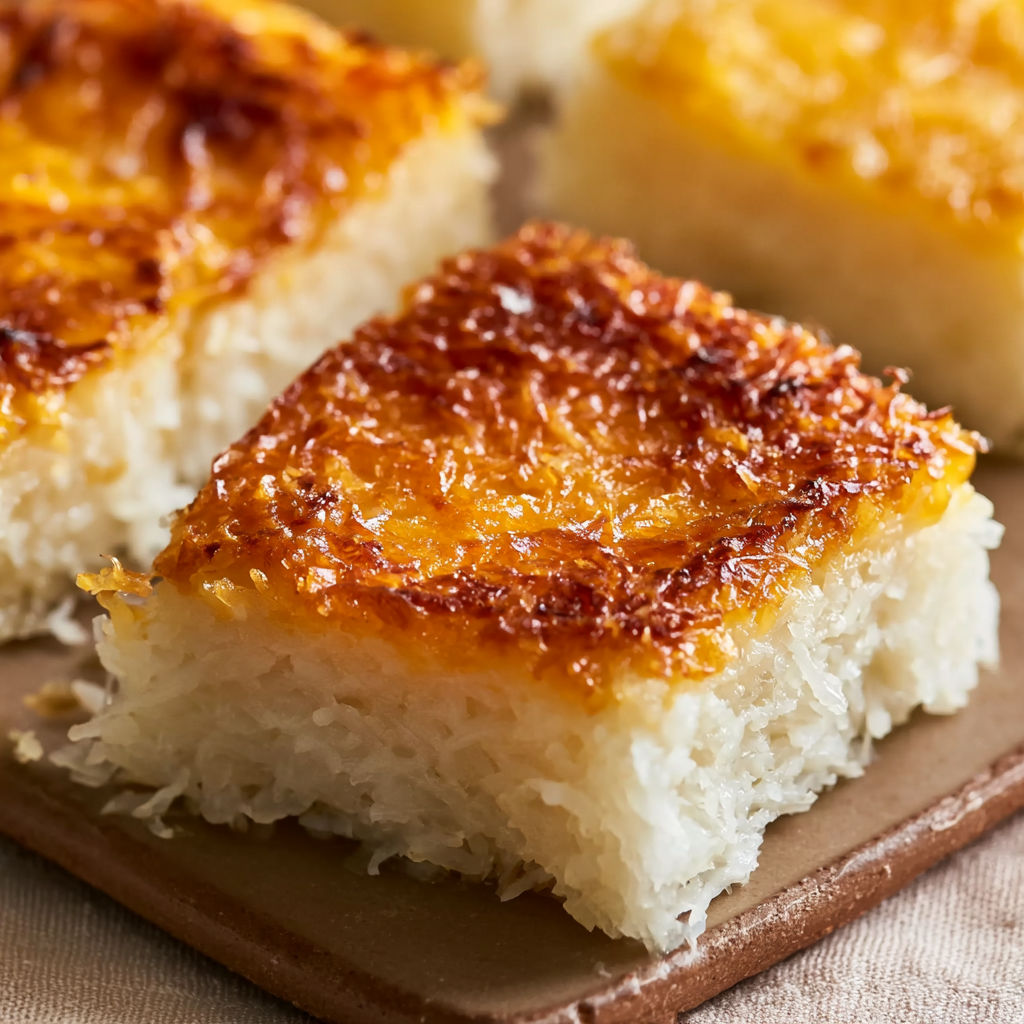
Sticky coconut cake is the kind of dessert that disappears at potlucks I know because every time I make it the whole pan is gone in minutes This cake has a chewy rich texture and super coconutty flavor something between pudding and a blondie and it is practically foolproof
This recipe first showed up at my table after a vacation in Southeast Asia and now it is the most-requested treat for family birthdays and holidays The overnight chill is the true magic step that turns it into something so addictively chewy
Ingredients
- Eggs: one for the batter and one for the shiny golden top always go with fresh large eggs for the best texture
- Granulated sugar: controls the sweetness and helps set the sticky crumb use a fine sugar for smoother mixing
- Full-fat canned coconut milk: is essential to give richness and true coconut flavor shake the can before opening for even consistency
- Sweetened shredded coconut: brings chew and even more coconut intensity look for soft moist flakes not dried out bits
- Glutinous rice flour: makes the cake irresistibly sticky do not swap for regular rice flour as it will not bind the same way check Asian groceries for freshest flour
- Vanilla extract: deepens the aroma and rounds out the coconut be sure to use real vanilla not imitation
Instructions
- Prepare the Oven:
- Preheat your oven to the right temperature this ensures the cake will bake evenly through from edge to center
- Mix Egg Whites and Sugar:
- In a medium bowl whisk together just the egg whites with sugar until they dissolve and look a bit glossy this helps prevent a dense texture by incorporating tiny air bubbles
- Combine Wet and Dry Ingredients:
- Stir in the coconut milk followed by shredded coconut glutinous rice flour and vanilla extract mix until completely smooth and no dry lumps remain the batter should appear thin more like pancake batter than typical cake
- Fill the Pan:
- Pour your batter into a greased eight by eight inch baking pan spread it if needed to level the top this helps the cake bake and set at an even height
- Bake the Cake:
- Place pan in the oven and bake for forty five minutes you want the edges to look firm and a light gold color but a slight jiggle in the middle is normal
- Add the Egg Yolk Glaze:
- Remove from the oven and gently brush the egg yolks over the warm cake surface this simple step creates the signature glossy golden finish that shatters a little when sliced
- Broil the Top:
- Switch your oven to broil then return the pan and broil for five to ten minutes watch carefully as the top browns quickly you are aiming for an even caramel color not burnt spots
- Cool Completely:
- Once broiled remove pan and place on a rack to cool to room temperature this prevents steam from making the cake soggy underneath
- Chill Overnight:
- Cover with plastic wrap and refrigerate for at least eight hours chilling is what gives the cake its signature sticky and chewy bite so do not skip this step
- Slice and Serve:
- Cut the set cake into neat squares or triangles and serve cold out of the fridge or let come to room temperature for a slightly softer crumb
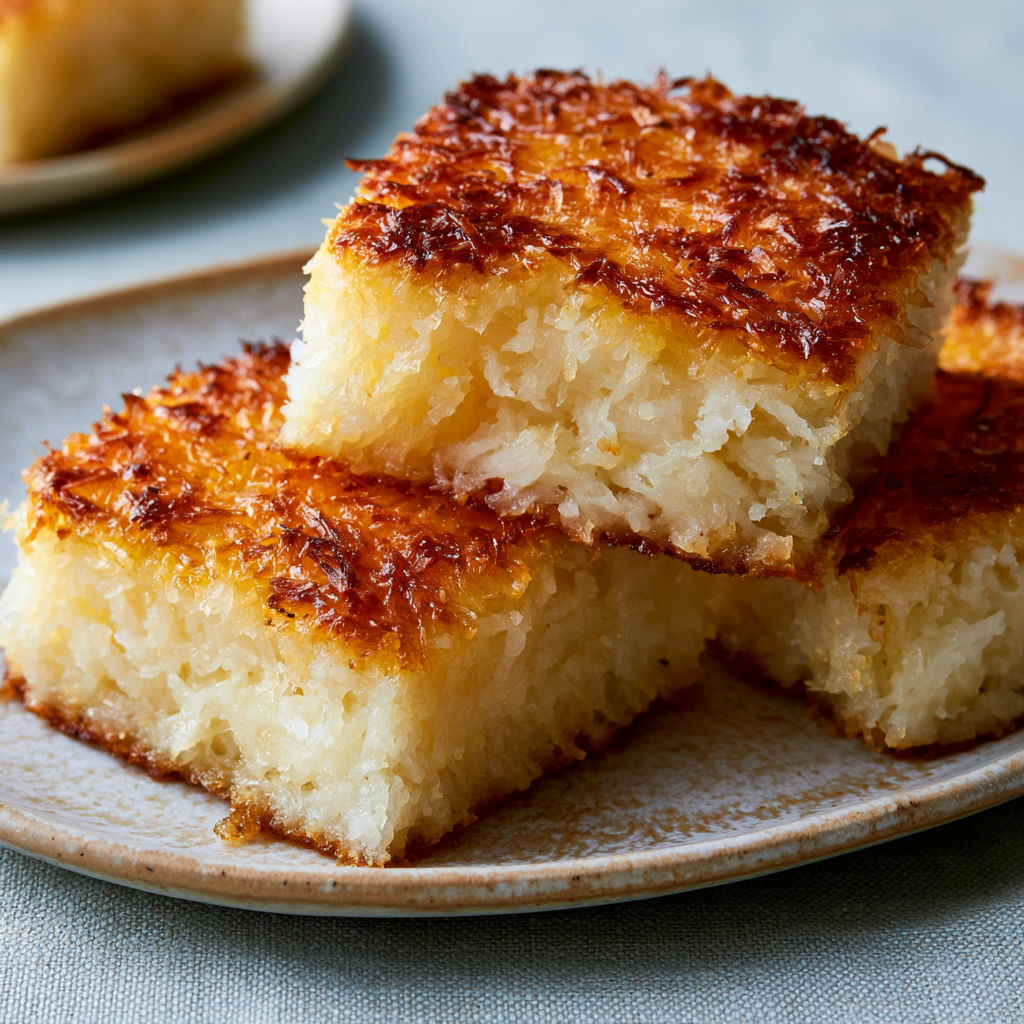
A single small square is satisfyingly rich better to serve small pieces and go back for seconds If I had to pick just one ingredient to highlight it would be the glutinous rice flour That sticky soul is everything and reminds me of the mochi I snacked on as a kid My uncle always asked for this with extra golden glaze and he would eat it still cold from the fridge with coffee in the morning
Storage Tips
To keep sticky coconut cake at its best store the cooled and cut pieces in an airtight container in the fridge The texture actually gets even chewier after a day While you can eat it straight from the fridge letting it sit for a few minutes brings back a bit of the original softness
Ingredient Substitutions
If you cannot find glutinous rice flour try mochiko brand which is often available in supermarkets Do not use regular rice flour which will lead to a crumbly cake For coconut milk the tastiest cakes come from full fat but for a lighter texture you can blend half regular coconut milk and half water Unsweetened shredded coconut works if you prefer less sweet cake just add three tablespoons extra sugar to balance it
Serving Suggestions
Pile the chilled squares onto a platter and dust with toasted coconut flakes for a party platter If making this for a brunch consider pairing with cold tropical fruits like mango or pineapple For something richer drizzle a small amount of coconut cream on each piece
Cultural and Historical Context
Sticky coconut cakes and puddings are beloved across Southeast Asia and Hawaii often served at New Year or special gatherings This version borrows from Filipino bibingka and Thai khanom babin traditions both of which rely on rice flour and coconut The chill step is a more modern tweak that really helps the flavors bloom and makes slicing neat and easy
Seasonal Adaptations
Try adding a hint of lime zest in summer for freshness Top with thinly sliced strawberries or mango in spring Serve warmed from the oven with ice cream on a cool night
Success Stories
A friend brought this to a holiday potluck and shared that their coconut-wary relatives were instant converts People always ask for the recipe and are surprised how simple the process really is It is a perfect bring ahead treat because it does not dry out
Freezer Meal Conversion
Sticky coconut cake freezes very well Once cooled slice into serving pieces and wrap tightly in parchment and foil To thaw leave in the fridge overnight or on the counter for about twenty minutes The texture holds up beautifully even after freezing
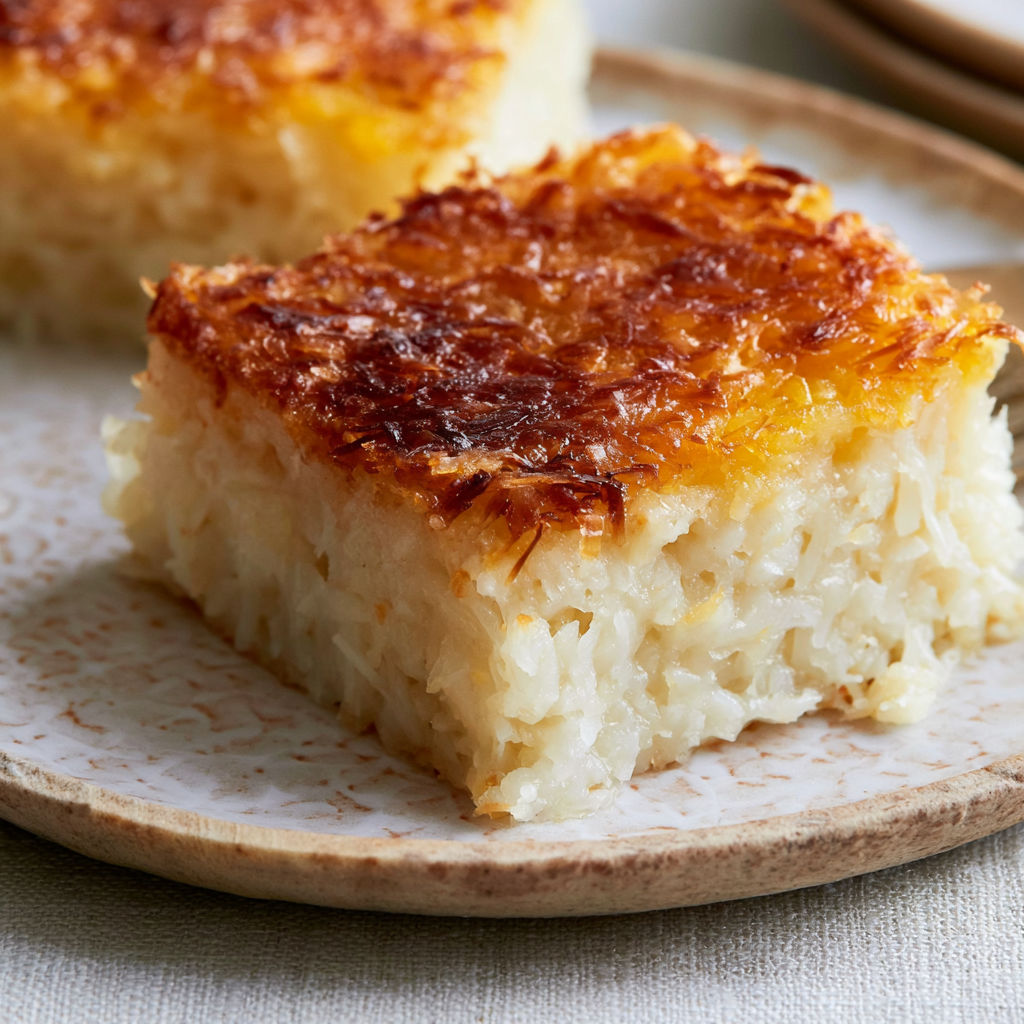
Once you try this cake you will see why it becomes a favorite for every family party The combination of sticky texture and deep coconut flavor is simply unforgettable
Recipe FAQs
- → What makes this coconut cake sticky?
The use of glutinous rice flour and coconut milk gives this cake its signature chewy, sticky texture and richness.
- → Can I use regular rice flour instead of glutinous rice flour?
Glutinous rice flour is essential for the desired chewiness. Substituting with regular rice flour will result in a different texture.
- → How should the cake be served?
Cut into squares or triangles and serve chilled straight from the fridge or at room temperature.
- → Why is the top of the cake broiled?
Broiling after brushing with egg yolks creates a golden, glossy crust on top, adding flavor and visual appeal.
- → How long does the cake need to chill before serving?
Refrigerate the cake overnight, or for at least 8 hours, so it fully sets and achieves its signature sticky texture.